

 Brain Aneurysm Foundation
 The Brain Aneurysm Foundation Announces its 2025 Research Grant Recipients
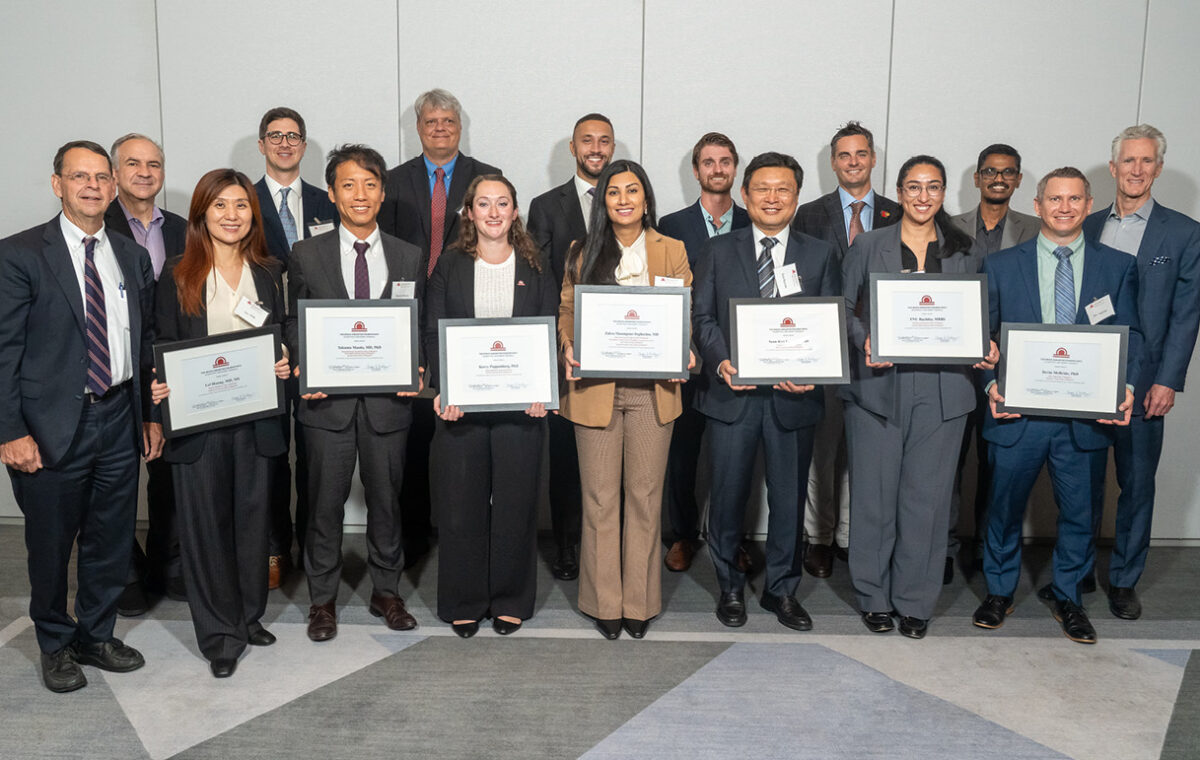
Close to $600,000 in Funding Provided to 14 Academic Researchers from Across the US to Advance New Innovations to Predict, Detect and Treat Brain Aneurysms.
Hanover, Mass., September 10, 2025 – The Brain Aneurysm Foundation (BAF), the leading advocacy organization supporting education, research, and policy to transform the treatment of brain aneurysms, today announced its 2025 research grant recipients. This year, the BAF is recognizing 14 researchers for their exceptional initiatives aimed at saving lives and reducing disabilities. The researchers will be formally recognized at the BAF’s 19th Annual Research Grant Symposium to be held in Scottsdale, Arizona, on September 11th, 2025.
The BAF is the largest private funder of brain aneurysm research. Projects awarded this year range from: the use of genome sequencing to understanding familial connections to the disease; identifying cellular pathways that may be relevant to preventing ruptures; the use of existing medications for neurorepair and protection; and a range of novel initiatives to prevent and treat often fatal subarachnoid hemorrhages caused by brain aneurysms.
“With already limited NIH funding for brain aneurysm research now at risk, our ongoing support for this work has become even more critical,” said Christine Buckley, executive director of the BAF. “We must work to ensure that promising science receives the resources needed to become life-saving treatments. We are proud to support the remarkable work of these researchers and to know that the funds we raise go directly to those who can have the greatest impact in the field and for the patients.”
Federal research funding for brain aneurysms remains disproportionately small compared to other neurological disorders and stroke, with under $3 committed to research for each person impacted. Approximately 1 in 50 people have an unruptured brain aneurysm, with more than 30,000 ruptures occurring annually in the United States. Half of those ruptures will be fatal and nearly 2/3 of survivors will have neurologic deficits.
“Grant funding from the BAF supports our research into novel diagnostics and emerging treatment options, helping us further our commitment to helping brain aneurysm patients access cutting-edge care,” said Dr. Josh Abecassis, associate professor in the Department of Neurological Surgery at the University of Louisville School of Medicine and a neurosurgeon at the UofL Health – Brain and Spine Institute. “We are using innovative imaging modalities to help understand the risk of rupture for certain aneurysms and to create a new imaging modality that can be broadly accessed and that ultimately guides patients and providers towards treatment of high-risk aneurysms. This work would not be doable without the generous support from BAF.”
During Brain Aneurysm Awareness Month in September and throughout the year, the BAF provides critical resources and support for survivors, their families, and caregivers. Due to a high rate of misdiagnosis, the BAF also supports educational programs for individuals and medical professionals aimed at increasing awareness of the signs and symptoms of a potential rupture, as once detected, most aneurysms can be treated.
“Academic research has remained the foundation of the remarkable advances our field has achieved over my three decades in practice,” said Dr. Michael T. Lawton, MD, President and CEO, and Chief of Neurovascular Surgery at Barrow Neurological Institute. “The BAF continues to play an outsized role in supporting researchers and identifying and funding innovations that will drive the next generation of breakthroughs and critical interventions for patients.”
The 2025 BAF Research Grant Recipients:
FNU Ruchika, MBBS, Johns Hopkins University – High-Resolution Imaging of NET Mediated Vasospasm in SAH- Identifying a Therapeutic Window
Isaac Abecassis, M.D., University of Louisville – Modeling Jet Flow Impingement in Intracranial Aneurysms Using CFD, 4D Flow MRI and 3D Printing
John Hagan, PhD, UTHealth Houston – Whole Genome Sequencing to Identify Candidate Familial Intracranial Aneurysm Genes
Jose Javier Provencio, M.D., University of Virginia School of Medicine – Myeloperoxidase Inhibition in Blood and CSF of Patients with SAH
Zahra Hasanpour-Segherlou, M.D., University of Florida, Gainesville – Biliverdin Reductase-A, a Heme Degradation Pathway Enzyme, as a Novel Therapeutic Strategy for Vasospasm Protection in SAH
Seon Kyu Lee, M.D., PhD, Montefiore Einstein – AI Assisted Multicompartment Cytokine Reactome Mapping in aSAH Patient with Vasospasm
Julian Clarke, M.D., University of Washington-Seattle – The Role of Brain Capillary Pericytes in Delayed Cerebral Ischemia After aSAH
Takuma Maeda, M.D., PhD, Barrow Neurological Institute – Blocking The PD-1/PD-L1 Axis to Prevent Intracranial Aneurysm Rupture
Peeyush Thakamani Pandit, UTHealth Houston – Repurposing Cancer Drug to Promote Vascular Repair and Neuroprotection after SAH
Humberto Mestre, M.D., PhD, Mass General Hospital – Enhancing Glymphatice-Lymphatic Clearance as a Novel Strategy to Treat SAH
Lei Huang, M.D., Loma Linda University – The Role of Aberrant Piezo1 Signaling in Delayed Cerebral Ischemia after SAH
Patrick Fillingham, PhD, University of Washington – An Automated Computational Method for Evaluating Cerebral Aneurysm Coiling Strategies
Kerry Poppenberg, PhD, and Tatsat Patel, PhD, University at Buffalo – Morphological and Molecular Markers for IA Screening in Patients with Family History
Devin McBride, PhD, UTHealth Houston – Role of Annexin After SAH