

 Brain Aneurysm Foundation
 Zachary Sorrentino, MD, PhD
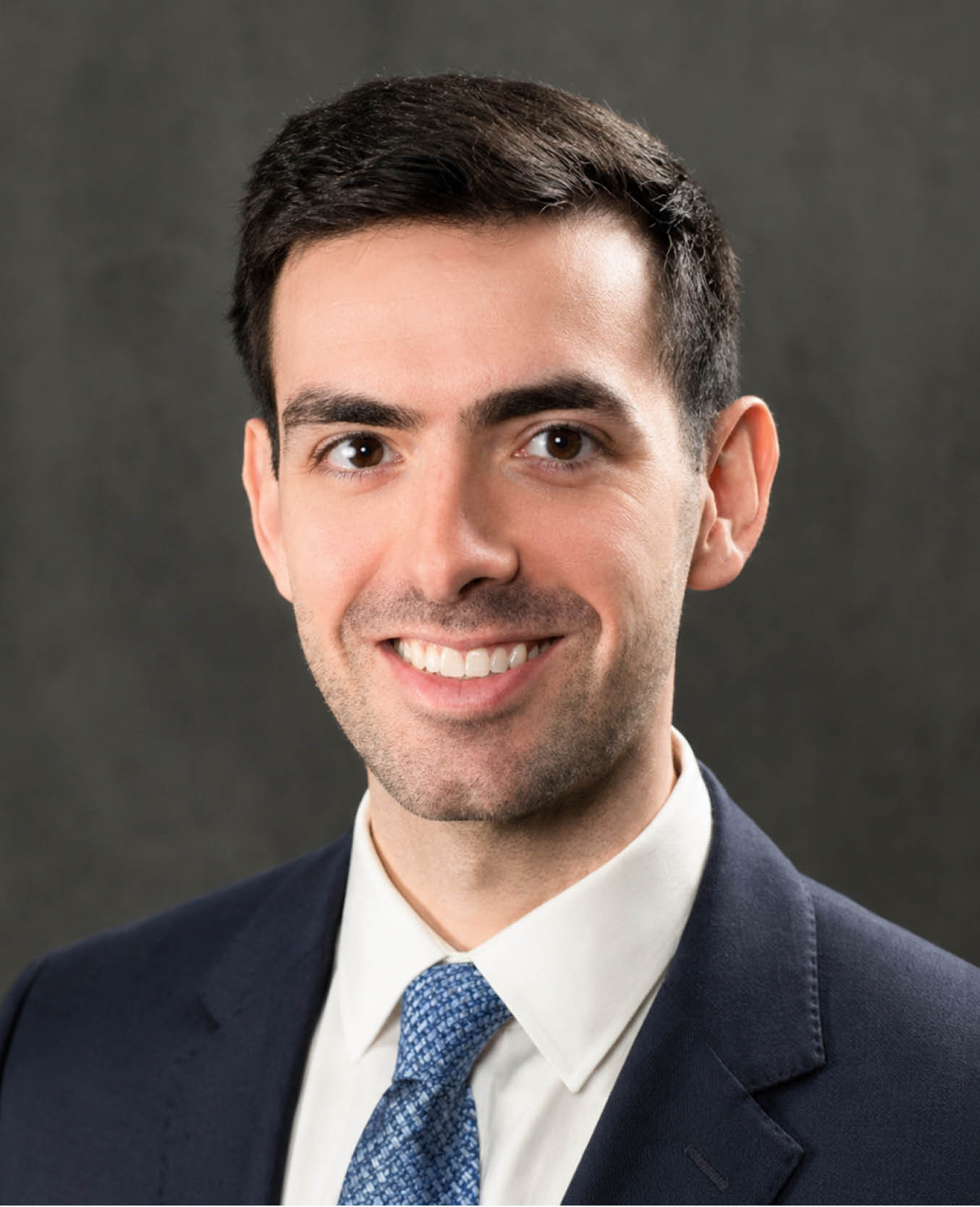
Zachary Sorrentino completed his MD-PhD training at the University of Florida where he completed doctoral studies in neurodegenerative diseases receiving F30 NIH fellowship funding. He began his training in neurosurgery residency at the University of Florida where he completed a dedicated research year studying new Immunotherapeutics for subarachnoid hemorrhage under the direction of Dr. Brian Hoh, and is currently completing his enfolded neuro-endovascular fellowship focused on aneurysm treatment and other vascular disorders. Zach plans to pursue an academic career in vascular neurosurgery with a focus on discovering and implementing new treatments for aneurysms and other neurovascular disorders.
Zachary grew up in Palm Beach, Florida, and attended the University of Florida, where he earned undergraduate degrees in Physics and Biochemistry. He continued his training at the University of Florida through its M.D.-Ph.D. program, earning a Ph.D. in Neuroscience alongside his medical degree.
Dr. Sorrentino is currently a fifth-year neurosurgery resident at the University of Florida and is completing an enfolded neuroendovascular fellowship. His clinical and research interests focus on advancing the treatment of cerebrovascular and neurovascular diseases. Outside of medicine, he enjoys spending time with his wife and their two children, whose support has been instrumental throughout his training.
What led you to become involved with brain aneurysm research?
When my father had a stroke, I was appalled at how little could be done. He lost his ability to walk or independently function, and his mere presence became a point of contention in our family due to the continual care he required. In medical school I came to realize how common this experience is for patients and their families suffering from neurovascular diseases, particularly in hemorrhagic strokes such as from aneurysmal subarachnoid hemorrhage, and I began a career path towards improving care for these patients. In residency, I have felt most drawn towards treating patients and their families suffering from aneurysmal subarachnoid hemorrhage, as they often have the longest and most arduous hospital course of all our patients and it is clear that better treatments are needed. Towards this goal, after neurosurgery residency I plan to oversee a translational lab bringing together patients and cutting-edge research to discover and implement new therapies. I have completed MD and PhD training focused on therapeutic strategies for neurologic disorders, and in my role as a neurosurgery resident I am mastering clinical and surgical care for these patients while partaking in mentored research with successful clinician scientists who will guide me in the transition towards becoming an independent investigator.
In the simplest terms, what is the purpose of your project?
Delayed cerebral ischemia (DCI) is one of the major complications that occur after aneurysm rupture, and its occurrence is a frequent reason for disability and death after aneurysm rupture. We need better answers regarding who is at risk of DCI, earlier markers for its occurrence, and prognostic markers to better understand patient recovery from DCI. We have found from initial work that cellular markers isolated from ventricular drains which are commonly utilized in these patients are associated with DCI occurrence, and we want to build on these markers to improve understanding of the neuroinflammatory mechanisms underling DCI, monitor efficacy of treatments targeting neuroinflammation, and evaluate correlation with prognosis after DCI.
In the simplest terms, what do you hope will change through your research findings?
From this work we hope to more readily isolate neuro-inflammatory cells from implanted ventricular drains and cerebrospinal fluid of ruptured aneurysm patients to improve understanding of the neuroinflammatory mechanisms underling DCI, monitor efficacy of treatments targeting neuroinflammation, and evaluate correlation with prognosis after DCI. In particular, a subset of patients we are receiving these ventricular drain and cerebrospinal fluid samples from are undergoing a new neuro-inflammatory treatment (anti IL-6 drug) to prevent DCI, and this project can help establish mechanism of action to improve DCI treatment.
Why is the funding you are receiving through the Brain Aneurysm Foundation so important?
While myself and other members of the neurosurgery team are happy to volunteer our time to conduct scientific work to improve the outcomes for our patients, lab reagents and advanced analysis methods such as RNA sequencing that we propose in this project are expensive. Through the support from the Brain Aneurysm Foundation and their donors, all funds received will go directly to experimental sample processing and analysis to better understand the neuroinflammatory landscape in isolated cells from ventricular drains and CSF in aneurysmal subarachnoid hemorrhage patients to improve our understanding of disease pathophysiology and establish new therapeutic strategies and prognostication methods.