

 Brain Aneurysm Foundation
 Sonia’s Story

Eight years after surviving a ruptured brain aneurysm, Sonia from England is once again facing an unexpected recurrence. She shares the frightening journey that began in 2018, the years she spent rebuilding her life, and how she is now preparing to undergo treatment once more—all while offering hope to others facing a brain aneurysm diagnosis.
Eight years ago, in 2018, when I was 31 years old, my life changed forever. It started as a completely normal day. I was working from home and had just finished having a shower. As I came out and was drying my hair, I suddenly felt what I can only describe as a bang inside my head, as though something had burst.
Because I still had my towel wrapped around my head, I remember thinking it must have been too heavy. I took the towel off, but within moments my whole body began shaking. My neck suddenly became stiff and pulled backwards. I genuinely thought I was having a seizure.
Despite feeling terrified, I managed to call my mum at work and ask her to come home. Somehow, I also managed to get downstairs and call 999. I explained what was happening, and they told me to unlock the front door and wait for the ambulance. The ambulance crew assessed me at home before taking me to hospital.
I have polycystic kidney disease (PKD), a condition that increases the risk of developing brain aneurysms, and the hospital was aware of this. I also have fibromyalgia. After being assessed, I was told my symptoms were thought to be related to my fibromyalgia, and I was discharged home.

The following day, my condition became much worse. I started vomiting repeatedly, I could barely open my eyes, and I spent most of the day lying on the sofa because I felt so unwell. My family became increasingly worried, so I called 999 again.
The ambulance crew returned and took me back to hospital. I remember one of the paramedics saying they were concerned I might have a bleed on my brain. At the hospital, I was assessed again. I stayed overnight and was told it was thought to be a migraine. I was discharged at around 4 a.m. and asked to attend the GP Assessment Unit later that same morning.
By this point, I was so unwell that I could hardly sit upright. I remember lying across the waiting room chairs with my head resting on my sister’s lap because I couldn’t hold it up myself. After being assessed again, I was told it could be a sinus infection. I was given antibiotics and anti-sickness medication before being sent home once more.
Over the next four days, I remained at home feeling desperately unwell. Over the following days, I remained incredibly unwell. I spent almost all of my time lying on the sofa, unable to open my eyes, barely eating, and doing virtually nothing. I called my GP several times because I knew something wasn’t right, but I was advised to continue taking the medication I had been prescribed and to give it time.
On the sixth day, I decided to try and have a shower. I remember thinking that washing my hair might make me feel a little better. Somehow, I managed to get myself into the shower. I remember sitting there washing my hair… and that’s the last thing I remember.
I have no memory of getting out of the shower. My sister found me collapsed on the bathroom floor with a towel wrapped around me. Looking back, I realise how incredibly lucky I was. My sister wasn’t due to be at home that day, but she was. I had also left the bathroom door open, which meant she was able to find me quickly.
An ambulance was called immediately. My sister explained everything that had happened over the previous six days and how my symptoms had progressively worsened. This time, I was taken to Queen’s Medical Centre in Nottingham. After a MRI, I was told the news that changed my life forever.
I had suffered a subarachnoid hemorrhage caused by a ruptured brain aneurysm.
Hearing those words was terrifying. The bleeding had spread around my brain and into my spinal cord. I spent the next two weeks in hospital, bed bound while doctors monitored me closely and treated the aneurysm.
When I was finally discharged home, I thought the worst was over. However, at my follow-up scan around six to eight weeks later, I was told the aneurysm had not been completely sealed by the coiling procedure. I would need to undergo another coiling procedure four months later, in September 2018.
If I could share one thing with the world about brain aneurysms, it would be this: never ignore your symptoms, trust your instincts if something doesn’t feel right, and don’t be afraid to ask questions about your long-term follow-up. After my aneurysm was coiled in 2018, my surgeon told me he didn’t expect to see me back in clinic. Eight years later, following a routine MRI, my aneurysm had recurred. That scan may have saved my life. My experience has taught me how important it is to attend follow-up appointments, discuss ongoing monitoring with your consultants, and advocate for your own health. Brain aneurysms can be life-changing, but there is hope, and early detection can make all the difference.
Recovery was much harder than I had imagined. I wasn’t allowed to drive, I couldn’t fly, and I was unable to return to work. Overnight, my independence had disappeared. My days became very quiet, and life suddenly felt like it had been put on hold.
The one thing that kept me going was walking. As my strength slowly returned, going for walks became my escape. They gave me a sense of freedom at a time when everything else felt uncertain, and they helped me cope with both the physical and emotional impact of surviving a brain haemorrhage.
Over the following eight years, I slowly rebuilt my life. Life was never quite the same after my brain haemorrhage, but I learned to adapt. I focused on my recovery, returned to work, completed my university degree, went to the gym, ate healthily and tried to look after myself.
Because of my history and my polycystic kidney disease, I also kept a close eye on my blood pressure and attended my regular follow-up appointments. For eight years, I believed that chapter of my life had finally come to an end.
Then, in December 2025, my nephrologist recommended that I have another routine brain MRI because it had been around two years since my previous scan. At the time, it felt like just another routine appointment.
My scan took place in June 2026. Two weeks later, everything changed. I was told there was increased blood flow within the area of my previously treated aneurysm. Further review confirmed the news I never imagined I would hear again. My aneurysm had returned. I contacted the neurosurgical team at Queen’s Medical Centre, where I had been treated eight years earlier. They reviewed my scans and arranged an urgent clinic appointment.
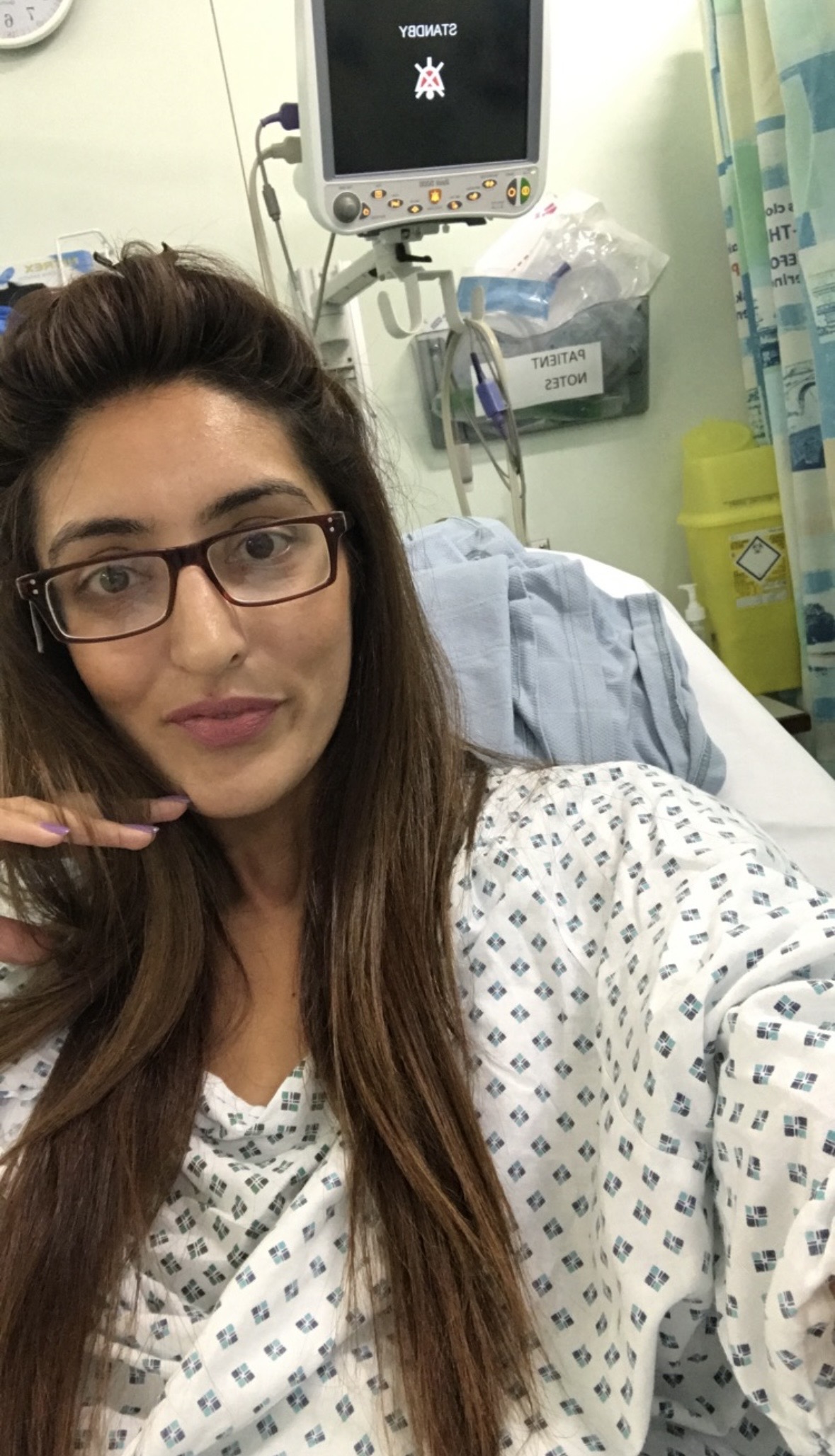
Sitting in that same hospital, speaking to the same surgeon who had treated me all those years ago, felt surreal. He confirmed that the aneurysm had recurred in exactly the same place. He explained that it was likely related to my blood pressure being difficult to control over the last year, despite treatment and monitoring.
Once again, I was faced with the words no one ever wants to hear.
I would need another procedure.
The plan is to undergo another endovascular coiling procedure within the next few weeks. Depending on what the surgeons find during the operation, I may also need a stent if recoiling alone is not enough.
In that moment, it felt as though my life had been put on pause all over again. Eight years after surviving a ruptured brain aneurysm, I now find myself preparing to face it once more.
The BAF community means hope, support and understanding. It reminds me that even during the most frightening moments, there are people who truly understand what you’re going through. Reading other people’s stories has helped me feel less alone, and I hope that by sharing mine, I can do the same for someone else.
As I write this, I am waiting for my next procedure. I don’t know exactly what the next few months will look like, and I’d be lying if I said I wasn’t frightened. But one thing my first aneurysm taught me is that even after your world is turned upside down, life can still move forward.
I’m sharing my story because brain aneurysms can affect anyone, and because listening to other people’s experiences helped me feel less alone. If my story encourages even one person to seek help, attend their follow-up scans, or gives someone hope during a difficult time, then sharing it has been worth it.
To anyone reading this who is facing an aneurysm diagnosis or recovering from one: you are stronger than you realise, and you are not alone.