

 Brain Aneurysm Foundation
 Aretha’s Story – Video
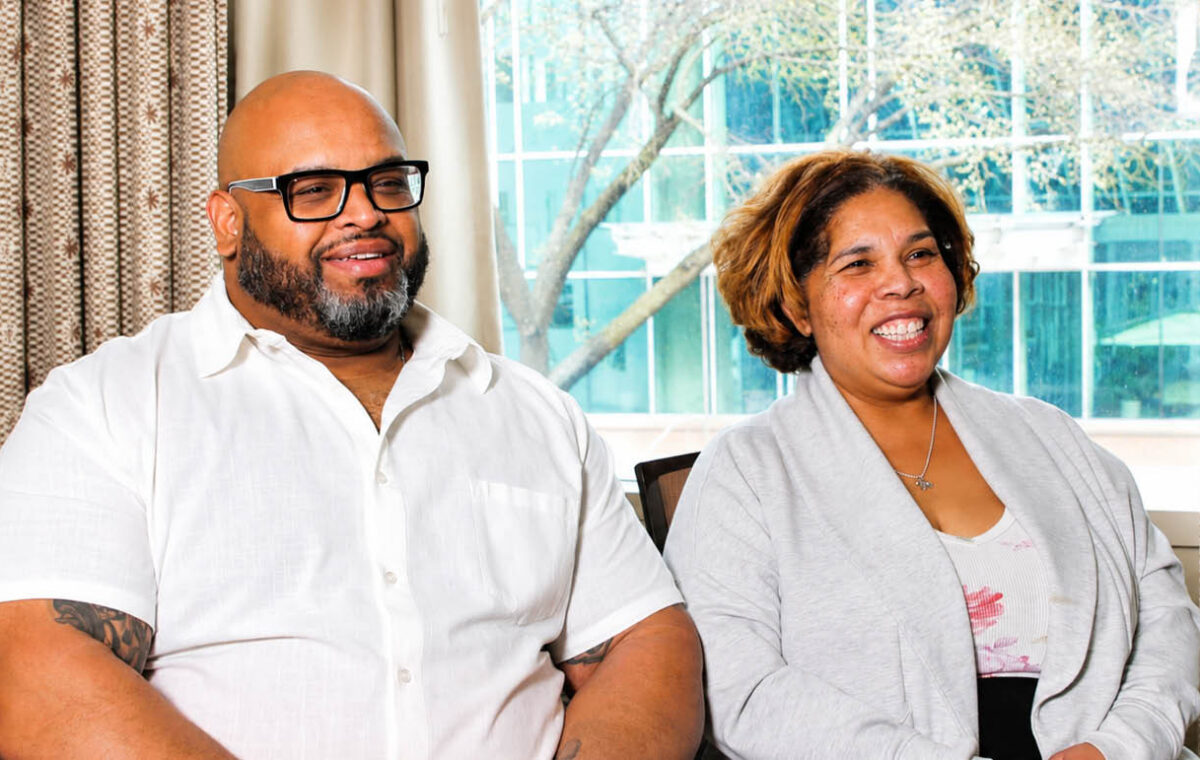
On August 11, 2022, Aretha’s life changed in an instant when she experienced a sudden brain aneurysm rupture during a work video call. After emergency treatment and months of hospitalization and rehabilitation, she faced the difficult journey of relearning how to walk, talk, and regain independence. In this inspiring video, Aretha shares the emotional realities of recovery, the impact her rupture had on her entire family, and how finding support through the brain aneurysm community ultimately led her to discover a renewed sense of purpose helping others facing similar challenges.
Video transcript:
Aretha: On August 11, 2022, I was on a work video call. I had my headphones in, listening to a meeting on Teams, when I suddenly heard and felt a pop in my head. I didn’t know what it was at the time, but I started yelling for help. I didn’t realize that my 17-year-old daughter was still home—it was August. Alex opened the door and said, “Mama?” She calls me Mama. “Mama, are you okay?” And I said, “No, go get your father.” So Alex went to get Gary.
Gary: The Tinton Falls police showed up, and we were waiting for the ambulance. She was saying maybe she should go to the hospital, and I said, “That’s already decided—you’re going.” I didn’t know what was happening at that point. We went to the hospital—Riverview Medical Center—and she went in for tests, including a scan of her head. I stepped out to grab lunch, and when I came back, they asked, “Where were you? The doctor is looking for you.” I thought, oh boy.
The doctor sat us down and said, “We found a brain bleed in Aretha’s head.” At that moment, I think I just shut down. I didn’t hear much after that. I called my brother, and from there everything became a whirlwind. At the time, they had only identified one aneurysm. They quickly arranged to transfer her to Jersey Shore, about 20 minutes away. Everything was already in motion—the transport team was ready. I think we waited maybe 10 minutes after hearing the news before they moved her.
Aretha: I was in the hospital from August to November 2022, and I had to learn how to walk again. I had to learn how to talk again. My left arm was immobile, so I couldn’t grab things, and they had to work on my dexterity. I felt like a child. The first thing the speech therapist gave me was a connect-the-dots puzzle. As I sat there trying to do it, I couldn’t. I was so embarrassed and upset that she had given me something like that. But then I realized—trying to go from A to 1 to B to 2 to 3 to C—it was incredibly difficult.
It’s not until something like this happens to you that you realize there should be more funding going toward it. In my recovery, I also had to come to terms with the fact that this didn’t just happen to me—it happened to Gary, to Alex, to my parents, to my brothers and sisters. That was really hard at first, because I kept thinking, this happened to me.
My first year, I joined the online support group with Dee Dee, and that’s how I heard about Advocacy Day. I thought, I have to go. What was so meaningful was finding a community—meeting people who looked like me and had gone through the same thing.
Going through this has brought me closer to understanding my purpose. I now volunteer at the hospital where I did my rehab, and I talk to other patients. It doesn’t matter what someone has gone through—we’re all trying to answer the same questions: Why did this happen to me? How do I get back to my life? What do I do next?
I like being able to talk to people about that—and most importantly, to give them hope.