

 Brain Aneurysm Foundation
 Alonna’s Story – Video
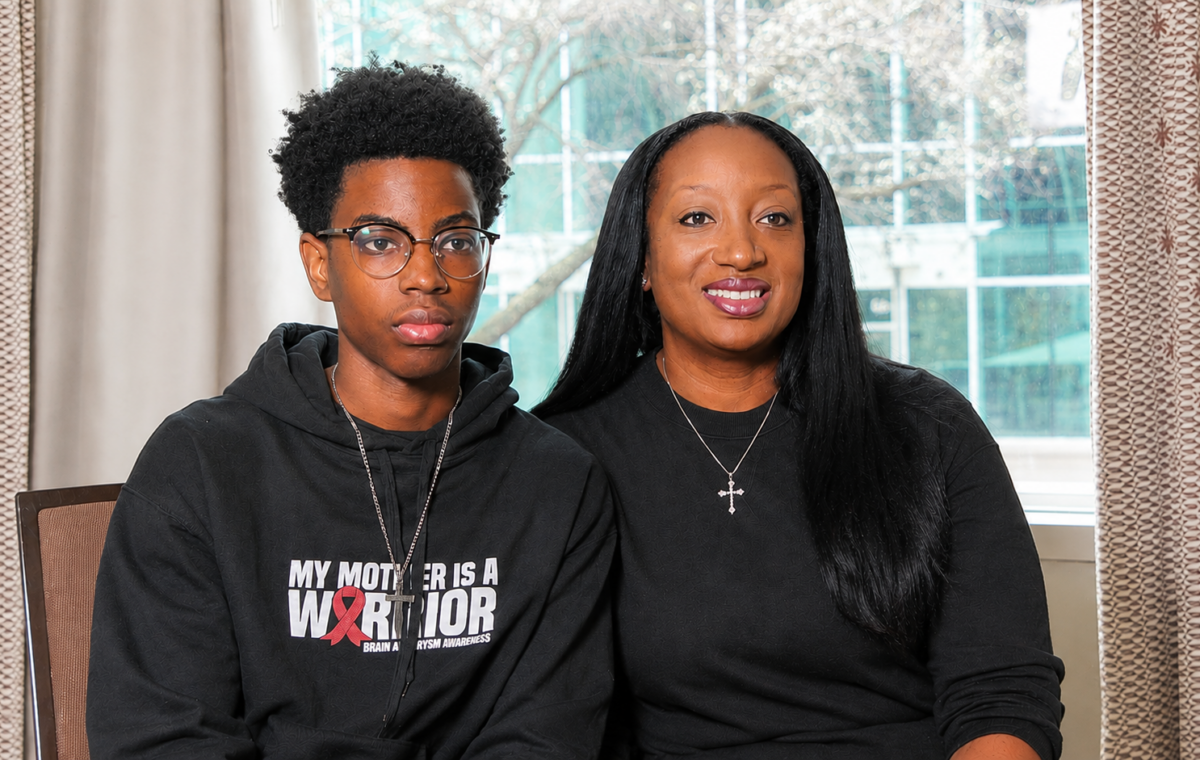
After surviving a ruptured brain aneurysm and enduring a long and difficult recovery, Alonna became determined to protect her children by seeking screening for her sons. Instead, she encountered insurance denials and barriers to care despite the prevalence of brain aneurysms, which affect 1 in 50 people. In this powerful video, Alonna shares the stark difference between recovering from a ruptured aneurysm versus treating an aneurysm before rupture, and why earlier detection, greater awareness, and improved access to screening could save lives and reduce long-term disability.
Video transcript:
Alonna: I was actually at my older son’s first junior varsity basketball game—he was a freshman—when I suddenly collapsed in the gym. The crazy part is, because I didn’t really know what a brain aneurysm was, I didn’t go directly to the hospital. I waited four days after the rupture before going in.
When I finally got there, they discovered that I actually had three aneurysms. The one that ruptured caused bleeding on the brain, so they decided to do surgery on that one. I remember my boys coming in—my sister-in-law brought them to see me—and they were just so happy. They were screaming and excited and full of energy.
Christopher: To be honest, I don’t remember when she talks about us coming to the hospital to see her. I don’t really remember that part. But what I do remember is the first day she came home.
We were at our grandparents’ house, and then we went home. I saw her sitting in a brown massage chair, leaned back, and we all ran up to hug her. It was joyful because she was finally home and present—but it was also sad at the same time, because I remember her just sitting there, not really herself yet.
Alonna: Because this all happened in 2019, I had to wait for surgery on the second aneurysm due to COVID. They considered it elective brain surgery, so I couldn’t have it that year. I ended up having surgery on the second aneurysm in 2021. Then in 2022, I had to have surgery again on the first one because the coils didn’t compact properly. The third aneurysm is inoperable due to its size and location.
As a mom, my first instinct was to get my kids tested. One of the first questions everyone asks is, “Do you have a family history?” My answer was no, and because of that, insurance wouldn’t cover screening for my children. The pediatrician actually wrote the prescription, but the insurance company denied it. The out-of-pocket cost is so high that it’s not realistic for most families.
One in 50 people having a brain aneurysm is a lot of people. To say that screening isn’t covered unless you have at least two family members affected—that’s just crazy. This is something that is clearly underfunded, yet so common.
Having experienced both, I can tell you the difference between a ruptured and an unruptured aneurysm is night and day. With a ruptured aneurysm, you’re talking about a month in the ICU. Like Christopher said, when you come home, you can’t really walk, you can’t really speak, and you need all kinds of therapy.
With an unruptured aneurysm, you’re in the ICU for about 24 hours, then moved to a regular room, and you go home shortly after. You might not walk normally for about a week—but it’s completely different.
If you feel like you have any signs or symptoms—even something like persistent headaches—please go get checked. I wish screening was just a routine part of healthcare, like cancer screenings. But if you have any concerns, don’t wait. It is so much easier to address before a rupture. Treatment isn’t simple, but the alternative is much, much worse.