

 Brain Aneurysm Foundation
Types of Brain Aneurysms, Explained
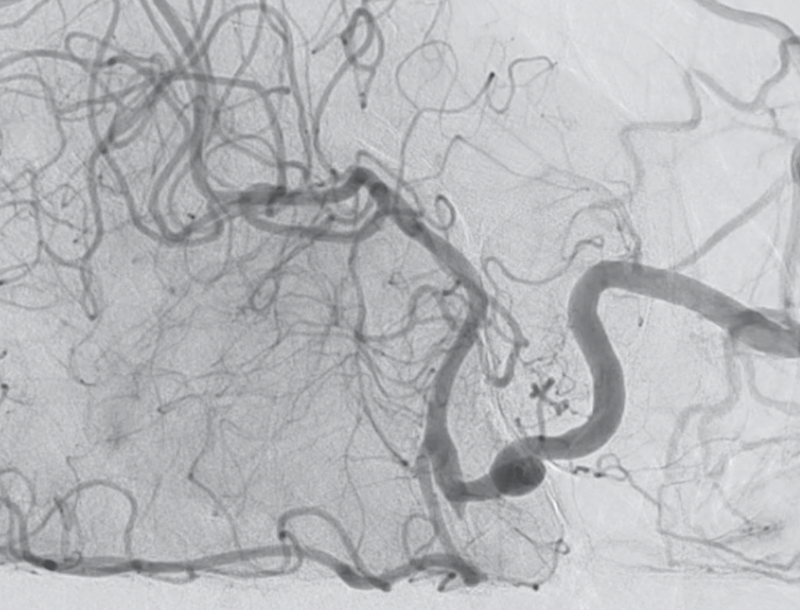
Intracranial aneurysms present in different shapes and sizes. Saccular aneurysms form a distinct pouch, fusiform aneurysms involve widening of the artery itself, and mycotic aneurysms result from infection weakening the artery wall. This blog will identify the different types of brain aneurysms and review their features that may impact treatment.
A brain aneurysm is a bulge that forms a weakened section of a blood vessel in or around the brain. Blood flow constantly pushes on the weakened section of the blood vessel to create or enlarge the bulge. Most aneurysms are small and do not cause symptoms. A concern is that some aneurysms can grow and then rupture, leading to life-threatening bleeding around the brain. Your doctor will consider the type, shape, size, and location of a brain aneurysm to assess the risk of rupture and treatment options. Three common aneurysm types include saccular, fusiform, and mycotic. Each type of brain aneurysm has different characteristics that may inform your plan for treatment.
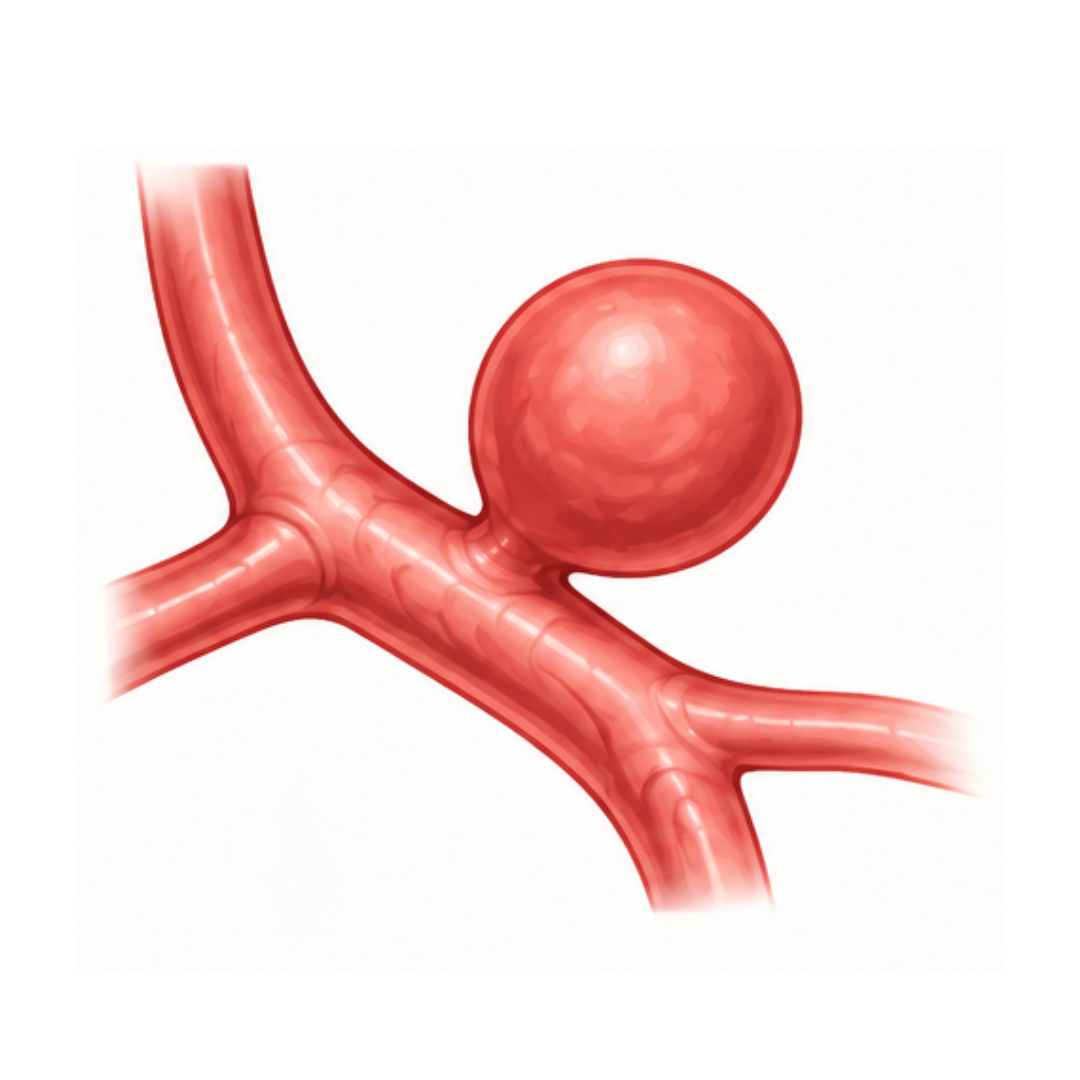
Saccular Aneurysms
A saccular aneurysm is the most common type of brain aneurysm, making up about 90%. It is a blood-filled sac that projects from the main artery or its branches, commonly found at the base of the brain. This is also called a “berry” aneurysm because it looks like a round berry attached to a vine. Saccular aneurysms occur at branch points, areas where blood vessels divide and come together, due to changes in blood flow and stress on the vessel’s wall.
Saccular aneurysms appear very balloon-like and are often connected to the artery by a narrow opening, which is called a neck. Due to this neck and pouch-like shape, saccular aneurysms are often treated with microsurgical clipping, where a small clip is placed across the neck of the aneurysm, or an endovascular procedure performed inside the blood vessel, which includes coiling or flow diversion. Each approach to aneurysm treatment results in reduced blood from entering the weakened sac, allowing it to clot and heal over time.
Not every saccular aneurysm requires immediate treatment, as some can be monitored with imaging when estimated risks of treatment outweigh the risk of the aneurysm itself.
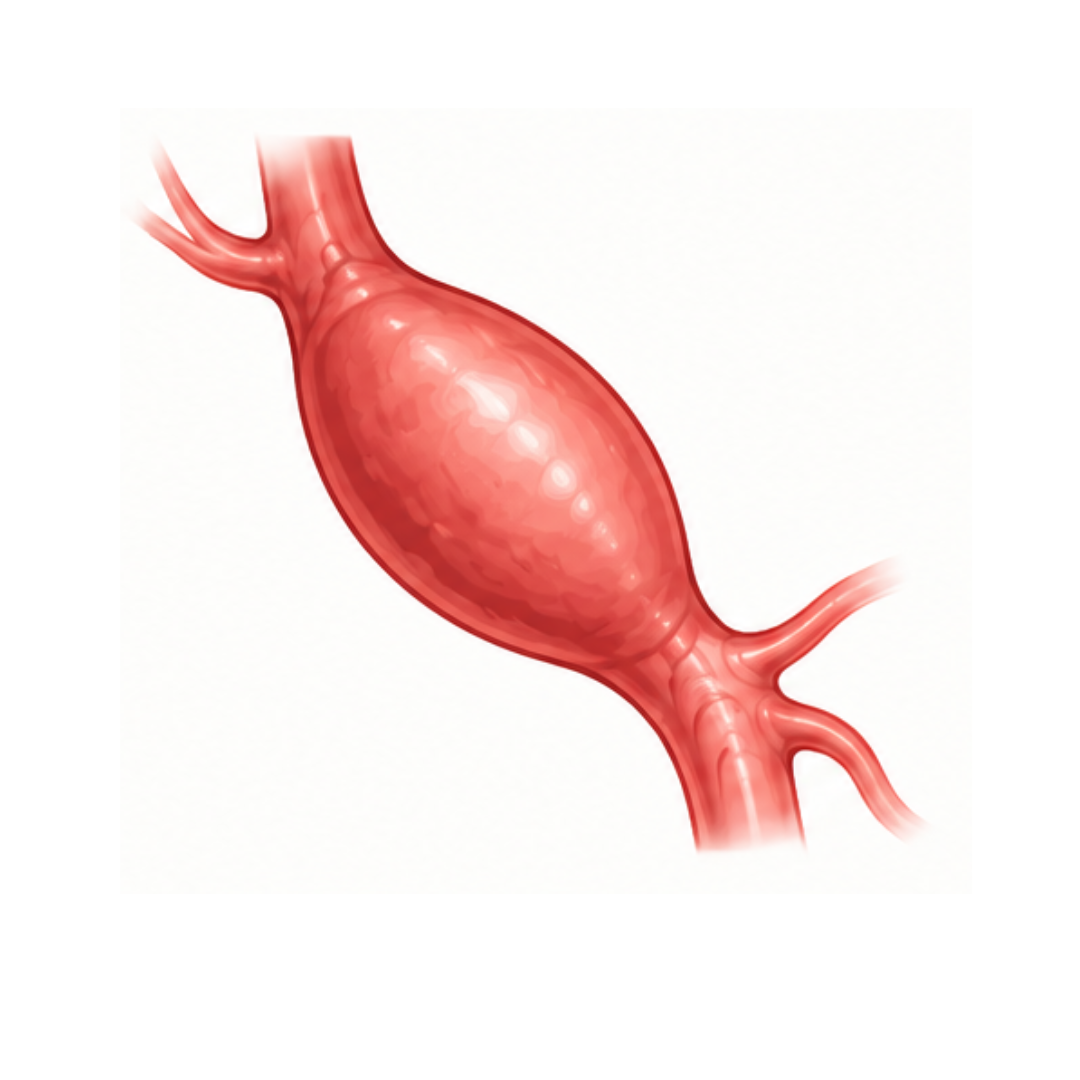
Fusiform Aneurysms
A fusiform aneurysm is a type of brain aneurysm with an elongated, widened shape, making up 3-13% of brain aneurysms. Rather than a distinct pouch-like structure, the entire area of an artery will expand on all sides of the vessel. Fusiform aneurysms often occur in the posterior circulation of the brain, which includes the arteries that supply blood to the back of the brain.
This aneurysm commonly forms near areas of plaque lining the artery, which weakens the vessel’s wall. Without a distinct neck, clipping or coiling is likely not possible. Doctors may consider treatments to redirect blood flow, often involving endovascular flow diversion. A flow diverter is a thick, flexible, mesh tube placed inside a brain artery to redirect flow past the opening of the aneurysm, stopping blood from reaching the vessel’s walls and allowing it to heal.
The best approach to treatment depends on the artery involved, the length and shape of the aneurysm, and whether branches arise from the affected area.
Mycotic Aneurysms
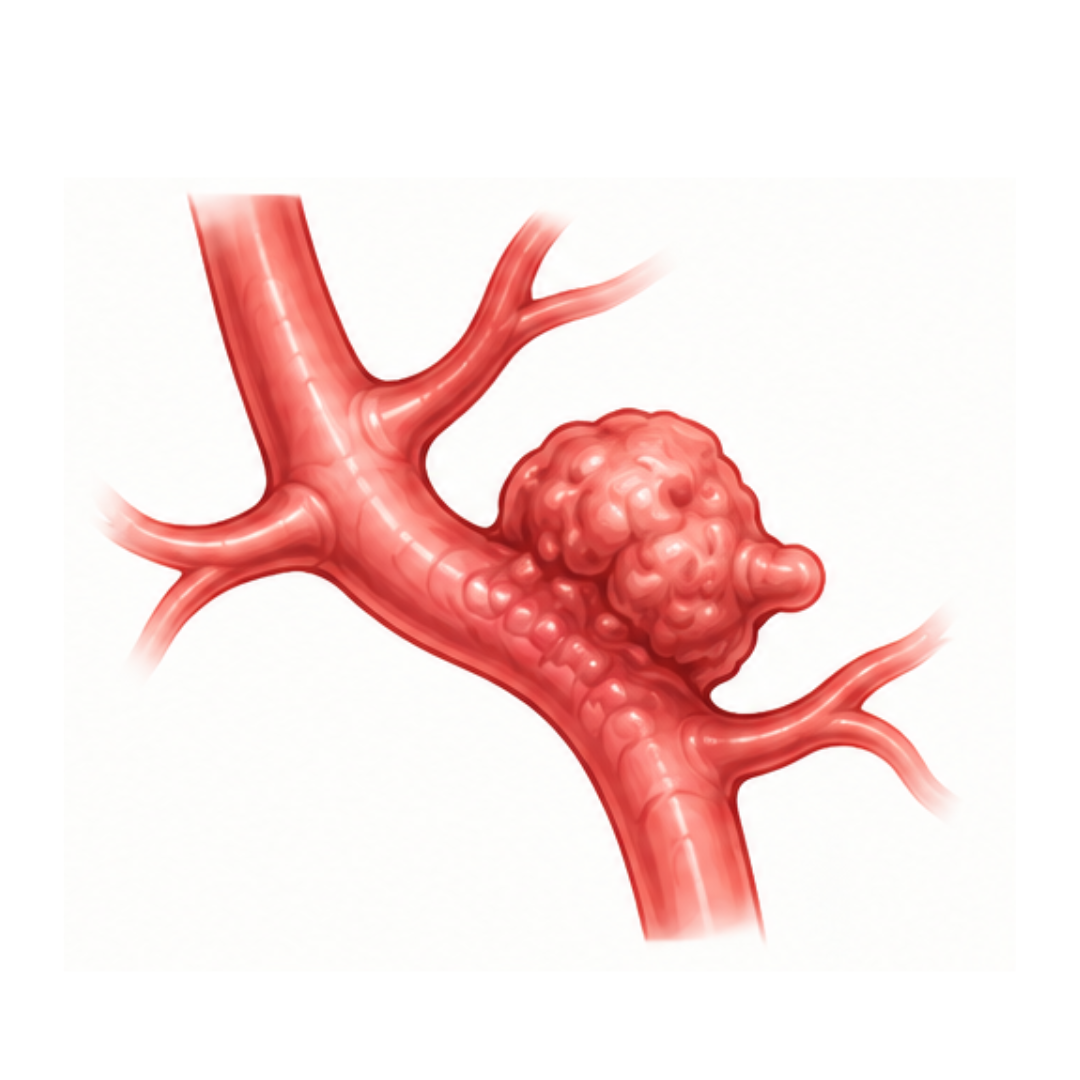
A mycotic aneurysm, or “infectious” intracranial aneurysm, develops when infection reaches and damages the wall of an artery, which weakens it and allows an aneurysm to form. Infectious endocarditis, an infection involving the heart, is a common source, accounting for 15-30% of mycotic aneurysm formation.
The infected material from the heart can pass through the bloodstream and enter the blood vessels of the brain. Infectious aneurysms are often small, irregularly shaped, and located far out in the blood vessel branches. They can also occur in multiple locations. Since infection is a part of the underlying problem, treatment is different than saccular and fusiform aneurysms.
Treatment starts with antimicrobial therapy to manage the ongoing infection, and some aneurysms may get smaller or go away after the infection is treated. However, if the aneurysm is growing, causing symptoms, or has ruptured, it may be considered high-risk and require endovascular or surgical treatment.
It is important to remember that the diagnosis of a brain aneurysm is only the beginning of your conversation with your provider, care team, and support system. The shape, location, size, cause, and type of aneurysm will help a care team prioritize your safety and determine whether an aneurysm should be monitored or treated.