

 Brain Aneurysm Foundation
 BAF Changemaker: Becky Brown
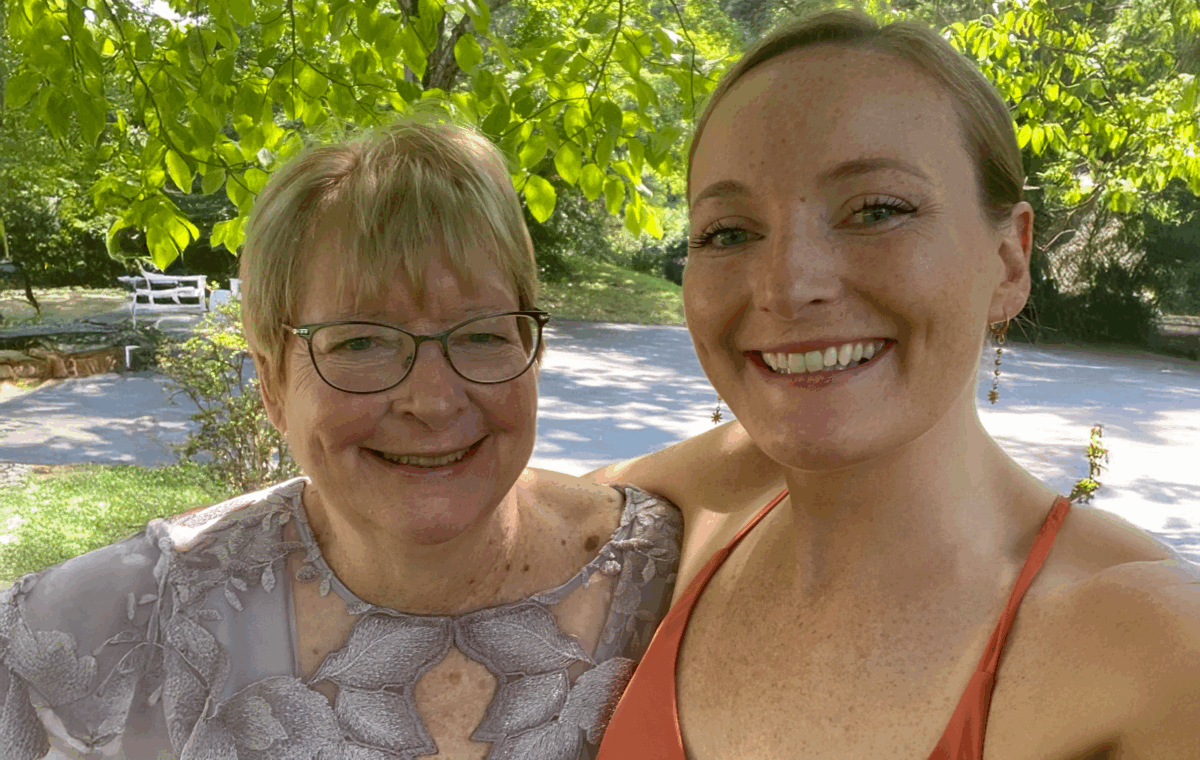
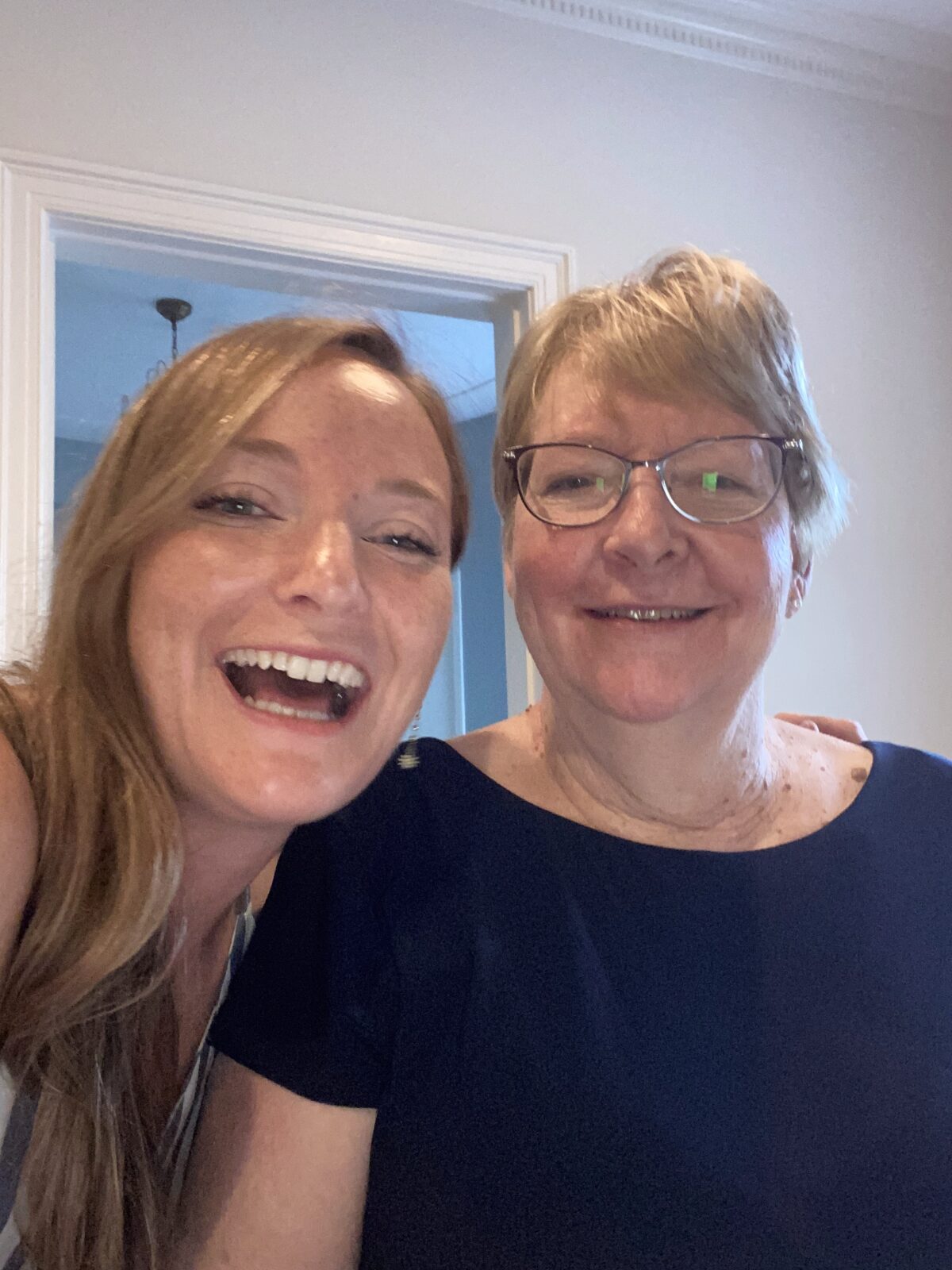
Becky Brown from Simsbury, CT, with her mom Helen.
In 2005, Becky Brown’s mother suffered a ruptured brain aneurysm, forever changing the course of her family’s life. Over the past two decades, Becky has witnessed her mother’s courageous fight and continues to draw strength from her resilience. Now, Becky channels that experience into action by raising awareness so that others might be spared the same pain. She runs the Falmouth Road Race in support of the Brain Aneurysm Foundation, helping to fund lifesaving research and connect with others affected by this often silent and devastating condition.
BAF: Tell us a little about your connection with brain aneurysms.
BB: It was the evening of June 7th, 2005 – a beautiful summer night. I was 11 years old, sitting out on the porch, begging my mom to order me extra spicy buffalo chicken wings – a new favorite I thought I couldn’t live without. Usually, she would push back and insist on making a healthy dinner, but that night, I recall her quietly agreeing, her head bowed, as she mentioned she had a terrible headache. She ordered the wings, gave me a twenty to pay the delivery guy, and went to bed at 7:30 pm. I had no idea that would be the last normal moment we’d share for a long time.
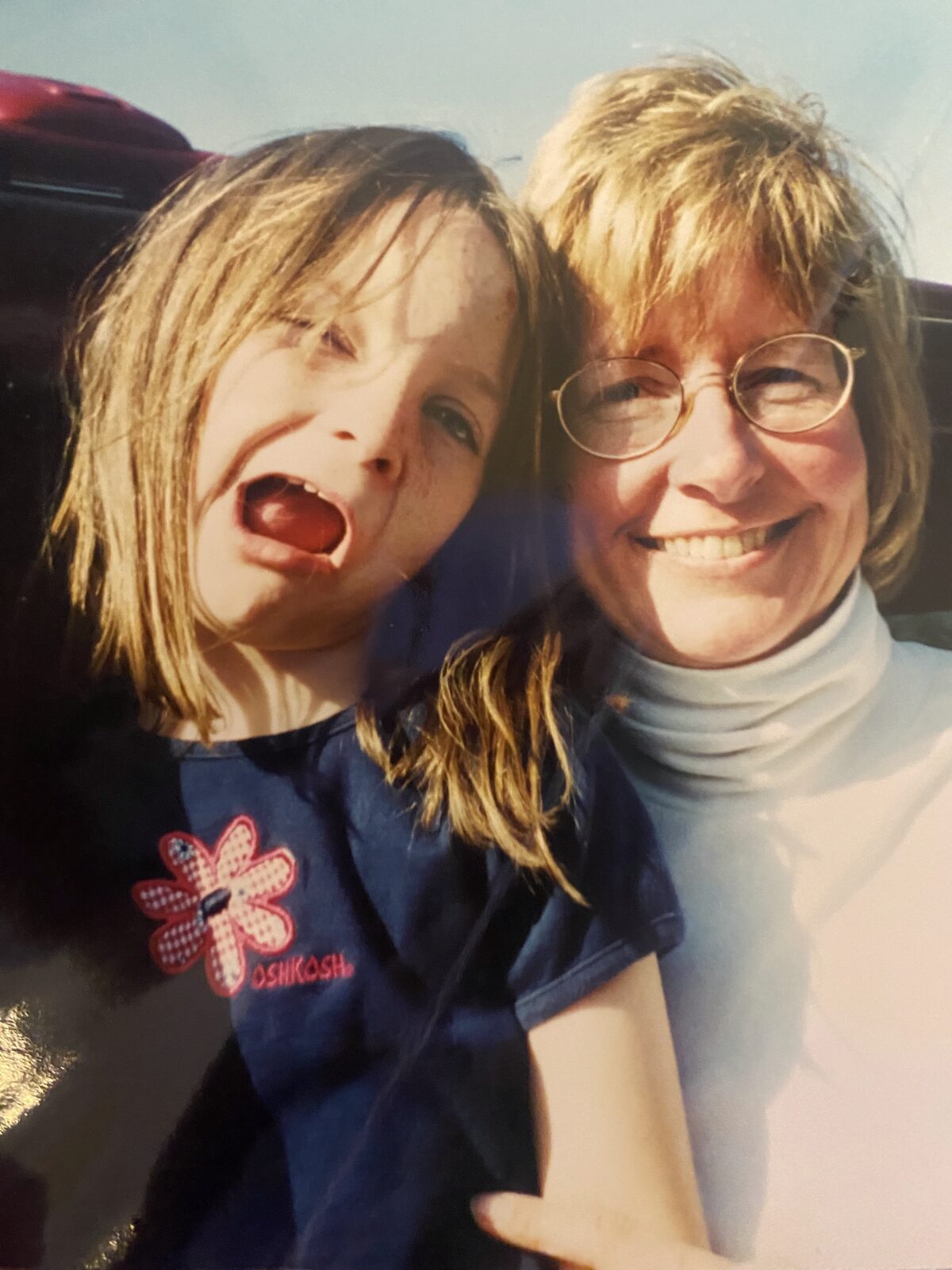
The next day, instead of going home after school, I was sent to my best friend’s house, which was just down the street. I could sense something was wrong when my sister and her best friend’s mom suddenly showed up. We were sat down and told that our mom had a subarachnoid hemorrhage and was in a coma at Hartford Hospital, and that it was serious. As a kid, I didn’t fully grasp the gravity of those words until I saw her in the neuro ICU, intubated and hooked up to an army of other machines. I remember burying my head into the nurse’s arms, unable to look. That image knocked the wind out of me and is one I still remember vividly.
She spent most of the month of June unconscious, and we didn’t know if she would survive – or what condition she would be in if she did. What followed for me was a summer filled with uncertainty and fear, as I tried to function as a kid who had just finished elementary school, thrust into crisis mode. I don’t know what my dad, sister, and I would have done without the support of our friends and family during that time.
Miraculously, my mom came home a few months later and began a very different chapter of her life – one marked by inspiring strength and resilience. She was able to see my sister and me graduate from high school, college, and graduate school and start our careers. My sister is now a parent herself, and my mom was here to witness that milestone too. Twenty years later, my mom continues to face her health challenges with grace. She lives in a memory care unit in Greater Boston, where we have an incredible team of aides helping her live safely and comfortably.
BAF: When did you first learn about the BAF?
BB: I first learned about the Brain Aneurysm Foundation in high school, around the time my dad began donating. It gave a name and purpose to something that had shaped our lives in such a significant way.
BAF: Have you participated in any BAF events? What did that experience mean to you?
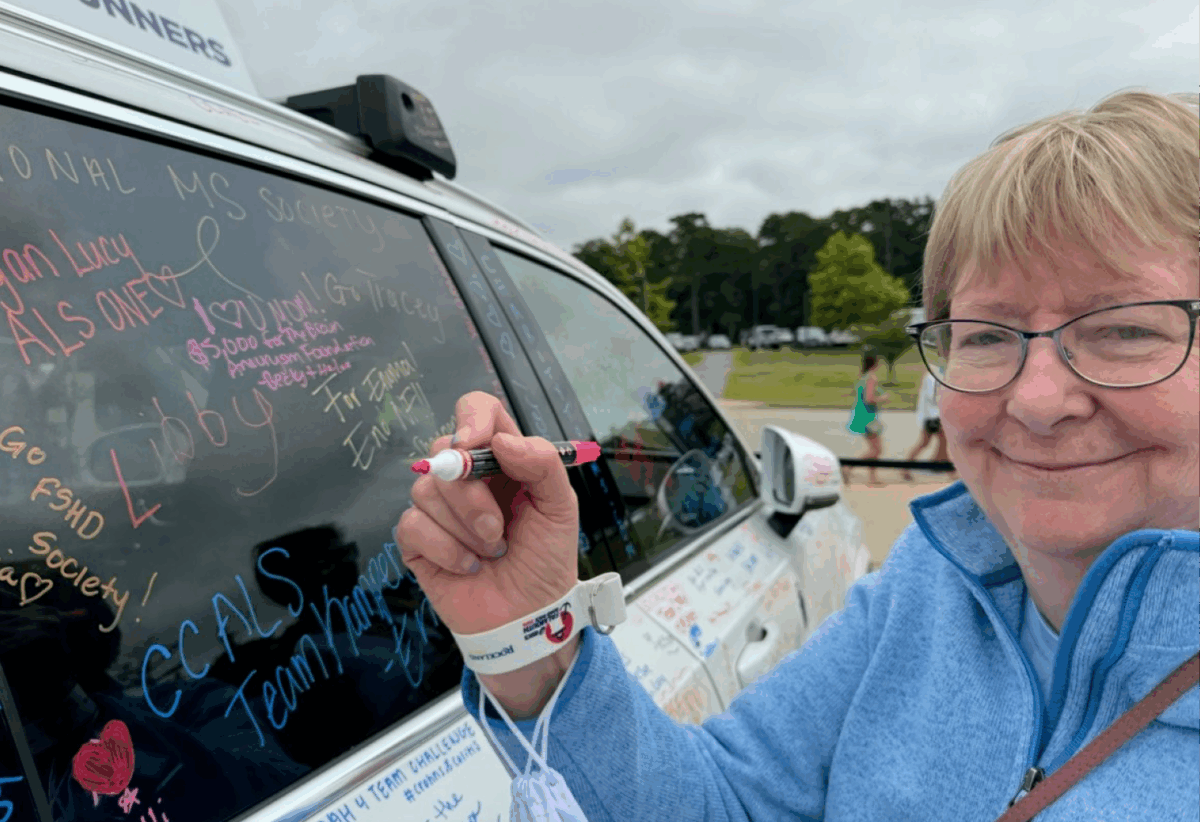
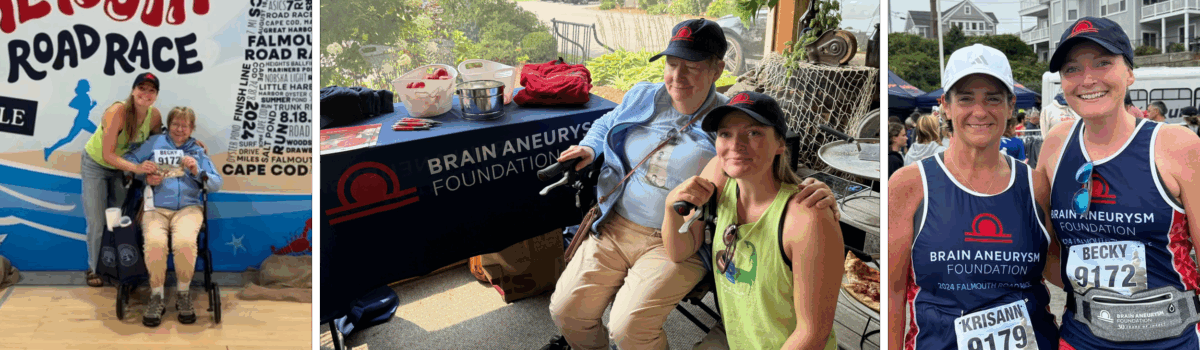
BB: I started fundraising for the BAF in 2023 through the Falmouth Road Race. Last year was especially meaningful – my mom was able to attend the BAF gathering in Falmouth the day before the race. Being there in person and connecting with others who understand this journey reminded me that we’re not alone, and it was awesome to see my mom be honored in that way.
BAF: How do you explain the importance of brain aneurysm awareness to people who may not know much about it?
BB: Brain aneurysms are one of those things that are invisible until they strike, without warning. Like many things in life, most people don’t know much about them until it affects them or someone they love. The rupture of a brain aneurysm is life-altering, and for me, raising awareness is a way that I can turn my painful experience into help for others and prevention.
BAF: What does the BAF community mean to you?
BB: To me, the BAF community represents understanding and purpose. It’s a space where people affected by brain aneurysms can come together to support one another, so fewer families have to go through what we did. For families like mine, we’ve built a new “norm” after crisis – one shaped by uncertainty, limitations, and huge emotional shifts. Each year, this event with the BAF community reminds me of how it “takes a village”. Would I undo my mom’s suffering that brought us here if I could? Without hesitation. But I’m grateful for the resilience the whole ordeal instilled in me, and instead of comparing to what might have been, I try to focus on what’s still possible and adapt. I think a lot about my friends and loved ones managing invisible struggles—whether it is a degenerative disease, mental health challenge, addiction, or physical/intellectual disability. The aftermath of a ruptured brain aneurysm is just one of many silent battles people face and a reminder of why awareness is so important. Being human means we aren’t invincible, and there is no need to face these challenges alone. I hope that sharing our story through the BAF channel will help the scientific community find answers more quickly and empower other survivors.
BAF: If you could share one thing with the world about brain aneurysms, what would it be?
BB: When in doubt, get checked out. Take the quiz on the BAF website to see if you are at risk. Risk factors include, but aren’t limited to: age over 40, family history of aneurysms, hypertension, alcohol/drug abuse, head trauma, and female gender. Early screening can save lives, and our healthcare system now has the tools to detect aneurysms before they rupture.
If you would like to support Becky in her fundraising efforts, click the button below.